
What Story Are You Telling?
What Makes a Brand Feel Intentional
(& Not Generic)
Take a scroll through any social feed and you’ll see them: polished logos, trendy color palettes, modern fonts. Sure, many brands look good, so why do so so few feel intentional?
Intentional Branding vs. Aesthetic-Only Branding
Aesthetic-only branding focuses on how things look. It’s driven solely by trends. It might be fun to look at, but it’s often disconnected from strategy or story.
For example, let’s say you see a colorful, playful logo depicting a fish in a net.
“Cute!” you think, clicking on the image. You’re sure you’re about to discover a fun new product, but somehow land up on a website featuring lakeside real estate listings. Not only are you confused, you might even think the company stole the branding from somewhere else, because the expectation is so far from the result.
Intentional branding starts with meaning. It asks deeper questions:
Why does this organization exist in the first place?
Who is it truly for? Describe your ideal customer.
What does it believe and stand for?
How should people feel when they encounter it?
From there, design decisions can be made grounded in purpose. Colors, typography, imagery, and layouts are chosen not just because they’re attractive, but because they’re saying something.
Aesthetic branding decorates. Intentional branding communicates.
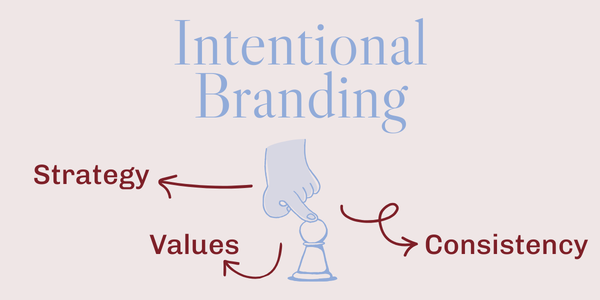
The Three Pillars of Intentional Branding
1. Strategy
Intentional brands begin with clarity. Strategy defines your positioning, audience, and message before any visual design happens.
Strategy asks:
What problem do you solve?
Who are you trying to reach?
How are you different from others in your space?
Without strategy, design becomes guesswork and brands end up looking interchangeable.
2. Values
Values give a brand depth and authenticity. They guide the tone and drive the visuals.
A mission-driven organization might choose warm, approachable colors and human-centered imagery. A research-focused nonprofit might lean into clarity, minimalism, and legibility.
When values shape design, a brand feels honest and aligned, not manufactured.
3. Consistency
Consistency is what turns a brand from a collection of assets into a recognizable identity. Intentional brands use the same visual language across:
Website and social media
Print materials
Presentations and proposals
Internal documents
External communications
Consistency builds recognition. Recognition builds trust.
Common Mistakes That Lead to Generic Brands
Even well-meaning organizations fall into traps that make their branding feel generic. Here are a few of the most common:
Chasing Trends Without Context
Trendy fonts and logo marks can be beautiful, but when everyone uses them, brands lose distinction. Trends should be filtered through strategy, not copied outright.
Starting With Design Instead of Discovery
Jumping straight into logos and color palettes without defining purpose and audience often results in brands that look nice but say very little.
Using Templates as a Final Solution
Templates can be very helpful starting points, but when they’re used without any tailoring, they create brands that feel interchangeable (and worse, forgettable).
Inconsistent Application
Even the most beautiful brand system feels generic if it’s applied inconsistently. Random fonts and colors quickly erode recognition and credibility.
How to Audit Your Brand for Intention
Not sure whether your brand feels intentional or generic? Try this simple audit:
1. Clarify Your Story
Can you clearly articulate:
Why you exist?
Who you serve?
What makes you different? If not, your brand may lack strategic grounding.
2. Review Your Visual Decisions
Ask yourself:
Why did we choose these colors?
Why this typeface?
Why this imagery style?
If the answer is “because we liked it” or “it looked neat,” there’s definitely room for deeper intention.
3. Check for Consistency
Look at all your touchpoints:
Website
Social media
Print materials
Internal documents
Do they feel like they actually belong to the same organization? Consistency is one of the strongest signals of intention (and professionalism).
4. Assess Alignment With Values
After you’ve reviewed your designs, honestly ask yourself:
Do your visuals reflect your mission and values?
If they don’t, you’re costing yourself missed opportunities in attracting the right customers.
Building an Intentional Brand
Intentional branding doesn’t require a massive budget or a large team. All it requires are thoughtful decisions and clear purposes. When brands are built with intention, they feel grounded and authentic. They tell stories that resonate and invite people to be part of something meaningful.
Ready to Build an Intentional Brand?
If you’re ready to move beyond templates and trends, we’d love to help you clarify your story and design a brand that reflects it.
